
Article Plan: Printable Yin Yoga Sequence PDF
This article details crafting a printable Yin Yoga sequence PDF, exploring its benefits, essential components, and resources for finding or creating one effectively.
We’ll cover philosophical underpinnings, pose selection, safety, and how to choose the best PDF for your practice needs and skill level.
Yin Yoga, a meditative practice, targets deep connective tissues – fascia – through long-held, passive poses, differing significantly from more dynamic ‘Yang’ styles like Vinyasa. This practice cultivates flexibility, joint health, and a profound sense of calm, making it accessible to all levels.
The rise of readily available, printable Yin Yoga sequence PDFs has democratized this practice, offering convenience and structure for home practitioners. These PDFs provide guided sequences, often including pose instructions, modifications, and duration timings, eliminating the need for constant screen viewing during practice.
A well-designed PDF allows for focused, uninterrupted practice, fostering mindfulness and deeper connection with the body. Whether you’re a beginner seeking a gentle introduction or an experienced yogi desiring a curated sequence, a printable PDF can be an invaluable tool. This article will guide you through understanding Yin Yoga, evaluating PDF quality, and finding resources to enhance your practice.
Understanding Yin and Yang Philosophy
Central to Yin Yoga is the ancient Chinese philosophy of Yin and Yang, representing interconnected, opposing forces that create a dynamic balance within the universe. Yin embodies qualities like darkness, passivity, and inwardness, while Yang represents light, activity, and outward expression.
These aren’t opposing forces in conflict, but rather complementary aspects of a unified whole. Everything contains seeds of both Yin and Yang, constantly shifting and transforming. In the body, Yin corresponds to deeper tissues – bones, ligaments, fascia – while Yang relates to muscles and circulation.
Yin Yoga specifically targets the Yin tissues, encouraging release and promoting energy flow (Qi). Understanding this philosophy enhances the practice, moving beyond mere physical stretching to a deeper exploration of energetic balance. A printable sequence PDF, informed by this understanding, will often emphasize poses that cultivate Yin qualities.
Historical Origins of Yin and Yang (3rd Century BCE)
The principle of Yin and Yang dates back to at least the 3rd century BCE in ancient China, though its roots likely extend even further into agrarian religious practices. Initially, it was used to explain natural laws, seasonal cycles, and even human emotions, forming a foundational element of Chinese thought.
Early texts, like the I Ching (Book of Changes), demonstrate the evolving understanding of these opposing yet complementary forces. The concept wasn’t static; it developed over centuries, becoming integrated into Confucianism and prominently featured in Daoism.
This historical context is crucial for understanding Yin Yoga, as the practice directly draws upon these ancient principles. A thoughtfully designed printable Yin Yoga sequence PDF acknowledges this lineage, offering poses and instructions rooted in a centuries-old tradition of seeking balance and harmony.
Yin: Qualities and Characteristics
Yin embodies qualities of darkness, femininity, and passivity, representing the receptive and introspective aspects of existence. It’s associated with the earth, valleys, and streams, and is often symbolized by the color orange and a broken line in the Tai Chi symbol.
Characteristically, Yin is retractive, contractive, and absorbing in nature. In the context of a printable Yin Yoga sequence PDF, this translates to longer-held poses that target deeper connective tissues – the fascia – encouraging release and introspection.
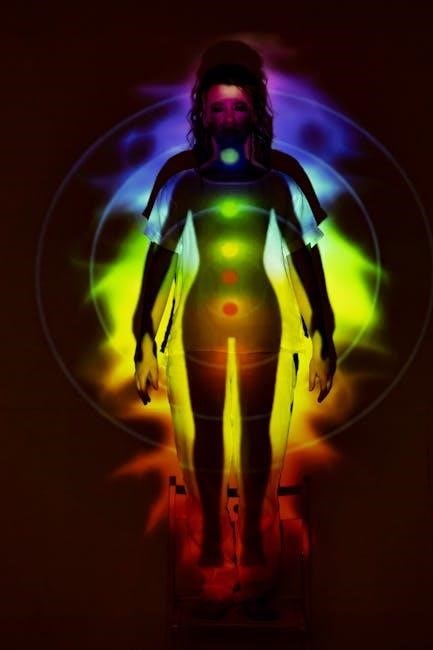
Yin is about slowing down, turning inward, and cultivating stillness. A well-crafted PDF will emphasize these qualities, guiding practitioners to find a meditative state within each pose, fostering a sense of calm and groundedness. Even numbers are associated with Yin.
Yang: Qualities and Characteristics
Yang represents light, masculinity, and activity, embodying the expansive and dynamic forces of the universe. It’s linked to heaven, maleness, and penetration, often symbolized by a solid line within the Tai Chi symbol and associated with the color white.
Yang is repelling, active, expansive, and repulsive in principle, contrasting directly with Yin’s receptive nature. While a printable Yin Yoga sequence PDF focuses primarily on Yin poses, understanding Yang is crucial for balance.
Yang energy is about movement, outward expression, and engagement. Though less directly featured in Yin practice, recognizing its presence helps practitioners appreciate the interplay between these opposing forces. Odd numbers are associated with Yang. A balanced sequence acknowledges both, even if subtly.
The Interplay of Yin and Yang – Achieving Balance
Yin and Yang aren’t opposing forces in conflict, but rather complementary aspects of a unified whole, constantly interacting and transforming into one another. This dynamic interplay is fundamental to Chinese philosophy and crucial for well-being. A thoughtfully designed printable Yin Yoga sequence PDF implicitly acknowledges this balance.
While Yin Yoga emphasizes stillness and inward focus, it doesn’t eliminate Yang. The practice prepares the body for increased Yang activity later. The goal isn’t to eradicate Yang, but to cultivate Yin to create equilibrium.
Understanding this duality allows for a more holistic approach to yoga and life. Recognizing the ebb and flow between these energies fosters adaptability and resilience. A good PDF might subtly hint at this balance, promoting mindful awareness of both Yin and Yang within the body.
Benefits of Yin Yoga
Yin Yoga offers a unique set of benefits distinct from more active, Yang-style yoga practices. A printable Yin Yoga sequence PDF serves as a convenient tool to access these advantages regularly. The practice deeply targets connective tissues – fascia, ligaments, and joints – improving flexibility and range of motion over time.
Beyond the physical, Yin Yoga profoundly impacts mental and emotional well-being. The long-held poses encourage stillness, fostering mindfulness and reducing stress. This meditative aspect cultivates a deeper connection to the body and inner self.
Regular practice can alleviate anxiety, calm the nervous system, and promote emotional release. A well-structured PDF can guide you through a sequence designed to maximize these benefits, offering a pathway to holistic health.
Physical Benefits: Flexibility & Joint Health
A printable Yin Yoga sequence PDF unlocks significant physical advantages, primarily focusing on increased flexibility and improved joint health. Unlike dynamic yoga styles, Yin targets deep connective tissues – fascia – which often remain unaddressed in typical workouts.
Holding poses for extended periods gently increases range of motion, particularly in the hips, pelvis, and lower spine. This can alleviate stiffness and discomfort, enhancing overall mobility. The practice also nourishes joints by applying gentle, consistent pressure, promoting lubrication and reducing compression.
Regularly utilizing a PDF sequence can counteract the effects of sedentary lifestyles and repetitive movements. It’s a restorative practice that supports long-term physical well-being, fostering a more resilient and adaptable body.
Mental & Emotional Benefits: Stress Reduction & Mindfulness
A printable Yin Yoga sequence PDF provides a powerful pathway to stress reduction and enhanced mindfulness. The long-held poses encourage a slowing down of the nervous system, shifting the body from a state of ‘fight or flight’ to ‘rest and digest.’
This deep relaxation response lowers cortisol levels, reducing feelings of anxiety and promoting emotional equilibrium; Yin Yoga cultivates present moment awareness, inviting practitioners to observe sensations without judgment, fostering a meditative state.
Consistent practice, guided by a PDF sequence, can improve emotional regulation and cultivate a greater sense of inner peace. It’s a valuable tool for managing daily stressors and nurturing mental well-being, offering a sanctuary for self-reflection and calm.
What to Look for in a Printable Yin Yoga Sequence PDF
When selecting a printable Yin Yoga sequence PDF, several key features enhance its usability and effectiveness. Prioritize clarity of instructions; poses should be described with precise cues, ensuring proper alignment and modifications are readily available.
Visual aids, like accompanying images or illustrations, are invaluable for understanding the poses. Consider the sequence duration and level – beginner, intermediate, or advanced – to match your experience. A well-designed PDF will clearly state this.
Look for PDFs that highlight the anatomical focus and target areas of each pose. This knowledge deepens your practice and promotes body awareness. Ultimately, a quality PDF empowers you to practice safely and reap the full benefits of Yin Yoga.
Clarity of Instructions & Visuals
A superior printable Yin Yoga sequence PDF hinges on exceptionally clear instructions. Each pose description should be detailed, guiding you into alignment with precise cues regarding body positioning and subtle adjustments. Ambiguity can lead to improper form and potential injury, so precision is paramount;
Complementing textual instructions, high-quality visuals are crucial. Images or illustrations should clearly demonstrate the pose from multiple angles, showcasing correct alignment and variations. These visuals serve as a readily accessible reference during your practice.
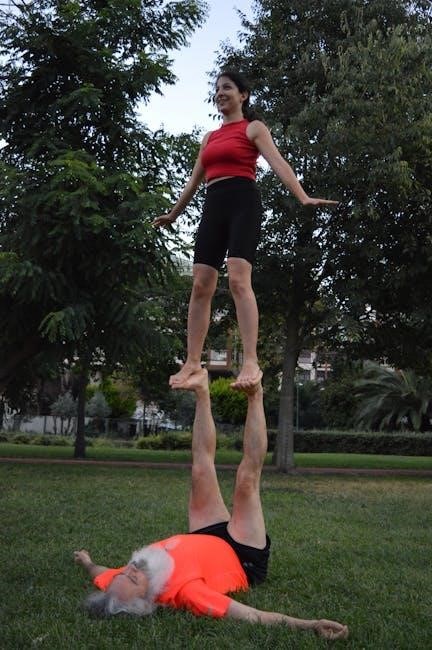
The best PDFs offer both detailed wording and illustrative support, creating a comprehensive learning experience and fostering a deeper understanding of each pose’s nuances.
Sequence Duration & Level (Beginner, Intermediate, Advanced)
When selecting a printable Yin Yoga sequence PDF, carefully consider its duration and designated level. Sequences can range from short, 20-minute flows to more extended 60-90 minute practices, catering to varying schedules and experience levels.
Beginner PDFs typically feature fewer poses, longer holds, and simpler transitions, focusing on foundational postures and building a basic understanding of Yin principles. Intermediate sequences introduce more challenging poses and variations, requiring greater flexibility and body awareness.
Advanced PDFs often incorporate complex poses, deeper stretches, and longer hold times, demanding a significant level of experience and self-awareness. Choosing a PDF aligned with your current abilities ensures a safe and rewarding practice.

Anatomical Focus & Target Areas
A well-designed printable Yin Yoga sequence PDF will clearly indicate its anatomical focus and the target areas addressed. Yin Yoga deeply impacts connective tissues – fascia, ligaments, and joints – so understanding this is crucial.
Some sequences prioritize hip openers, targeting the iliopsoas, piriformis, and glutes, while others focus on spinal mobility, addressing the back, shoulders, and neck. PDFs may also emphasize forward folds, stimulating the hamstrings and lower back, or twists, promoting detoxification and spinal health.
Look for PDFs that specify which meridians are stimulated, connecting the practice to Traditional Chinese Medicine principles. Knowing the anatomical focus allows you to tailor the practice to your specific needs and address areas of tension or imbalance.
Popular Yin Yoga Poses Included in PDFs
Printable Yin Yoga sequence PDFs frequently feature a core set of poses known for their deep tissue release and accessibility. Butterfly Pose (Baddha Konasana) is almost ubiquitous, opening the hips and groin. Dragonfly Pose (Eka Pada Rajakapotasana Variation), though more intense, is common, targeting the hips and inner thighs.
Saddle Pose (Janu Sirsasana Variation) gently stretches the spine and hamstrings, while Sphinx Pose (Salamba Bhujangasana Variation) offers a gentle backbend, stimulating the kidneys. Child’s Pose (Balasana) variations – supported or with knees wide – provide restorative benefits.
Many PDFs also include poses like Shoelace Pose, for hip opening, and Swan Pose, for chest and shoulder release. The inclusion of these poses indicates a well-rounded sequence designed to address common areas of tension.
Butterfly Pose (Baddha Konasana)
Butterfly Pose, or Baddha Konasana, is a foundational Yin Yoga posture frequently included in printable sequence PDFs due to its accessibility and profound hip-opening benefits. It’s often presented with modifications for varying levels of flexibility, utilizing bolsters or blankets for support.
The pose involves bringing the soles of the feet together, allowing the knees to fall open to the sides. Practitioners typically lean forward from the hips, deepening the stretch. PDFs emphasize maintaining a straight spine and avoiding forcing the knees towards the floor.
This pose targets the inner groin, hips, and lower back, promoting emotional release and calming the nervous system. It’s a gentle yet powerful way to cultivate stillness and self-awareness.
Dragonfly Pose (Eka Pada Rajakapotasana Variation)
Dragonfly Pose, a variation of Eka Pada Rajakapotasana, is a deeper hip opener often featured in intermediate to advanced printable Yin Yoga PDFs. It requires more flexibility than Butterfly Pose and is typically presented with careful attention to alignment and modifications.
The pose involves extending one leg straight forward and bending the other leg with the outer shin parallel to the front of the mat. Practitioners then lean forward over the bent leg, aiming to bring the chest towards the floor.
PDFs often illustrate using props like bolsters under the torso or blankets under the hip of the bent leg to support the pose and prevent strain. Dragonfly targets the hips, groin, and psoas, releasing deep-seated tension and promoting emotional release.
Saddle Pose (Janu Sirsasana Variation)
Saddle Pose, or Janu Sirsasana variation, is a potent hip and spine opener frequently included in printable Yin Yoga sequences, particularly those geared towards intermediate practitioners. PDFs often showcase multiple variations to accommodate different levels of flexibility and body types.
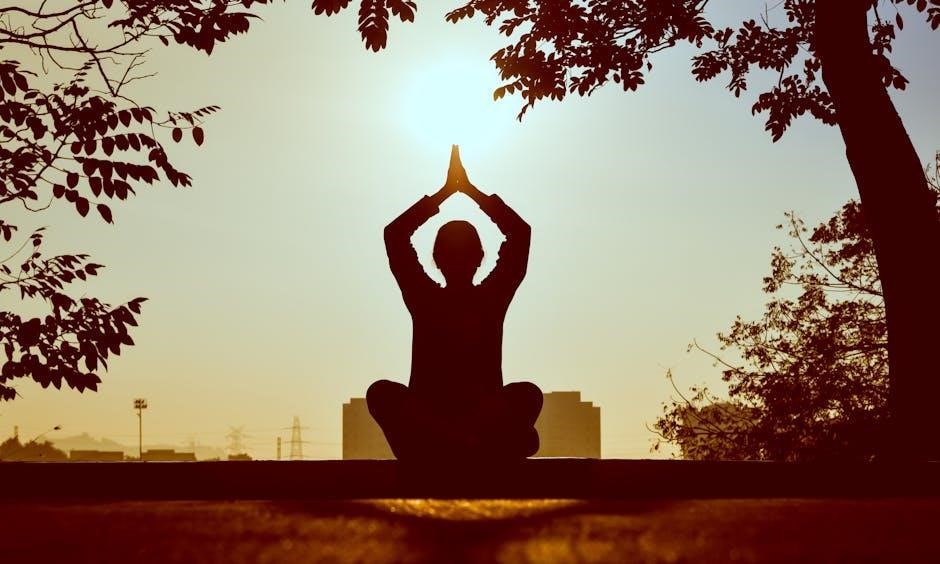
Typically, this involves sitting with the soles of the feet together and allowing the knees to fall open to the sides. Practitioners then gently fold forward, potentially resting the torso on the legs or using a bolster for support.
High-quality PDFs will emphasize the importance of maintaining a neutral spine and avoiding forcing the fold. Props like blankets under the sit bones can enhance comfort and allow for deeper relaxation. Saddle Pose targets the hips, inner thighs, and lower back, releasing tension and promoting emotional release.
Sphinx Pose (Salamba Bhujangasana Variation)
Sphinx Pose, a gentle backbend often presented as a Salamba Bhujangasana variation in printable Yin Yoga PDFs, serves as a wonderful preparation for deeper backbends or a standalone pose for spinal health. It’s frequently included in sequences designed for all levels, from beginner to advanced, with modifications clearly illustrated.
The pose involves lying prone with forearms on the floor, elbows directly under shoulders, and lifting the chest. PDFs will typically emphasize keeping the lower ribs grounded and engaging the back muscles to support the lift.
Props, such as a blanket under the pelvis, are often suggested to enhance comfort and support. Sphinx Pose gently stimulates the abdominal organs, opens the chest, and relieves stress, making it a valuable addition to any Yin practice.
Child’s Pose (Balasana) Variations
Child’s Pose (Balasana) is a cornerstone of Yin Yoga, and printable PDFs invariably feature several variations to cater to different needs and levels of flexibility. It’s a deeply restorative pose, often used for grounding and calming the nervous system, making it a frequent inclusion in sequences.
Common variations detailed in PDFs include knees-together and knees-wide versions, as well as arms extended forward or resting alongside the body. Some sequences introduce supported Child’s Pose, utilizing bolsters or blankets under the torso or head for enhanced comfort.
PDFs will often highlight the importance of allowing the forehead to rest gently on the floor, or a block if needed. These variations offer accessibility and allow practitioners to modify the pose based on their individual anatomy and comfort levels.
Finding & Downloading Printable Yin Yoga Sequence PDFs
Locating printable Yin Yoga sequence PDFs is surprisingly accessible, with numerous online resources available. Reputable yoga websites, studios, and individual teachers frequently offer free or paid downloadable sequences. Platforms like Yoga International, DoYogaWithMe, and various yoga studio websites are excellent starting points.
A simple online search using keywords like “printable Yin Yoga sequence PDF” yields a wealth of options. However, it’s crucial to assess the source’s credibility before downloading. Look for PDFs created by certified Yin Yoga instructors or established yoga organizations.
Many studios offer free introductory PDFs to attract students, while more comprehensive sequences are often available for purchase. Consider your experience level and desired focus when selecting a PDF.
Reputable Websites & Yoga Studios
Several websites consistently provide high-quality, reliable Yin Yoga resources, including printable sequences. Yoga International offers a diverse library of classes and downloadable PDFs, often created by experienced instructors. DoYogaWithMe provides both free and premium content, with a selection of Yin Yoga sequences suitable for various levels.
Many established yoga studios also share printable sequences as part of their online offerings. Websites like Ekhart Yoga and YogaGlo (now Glo) feature extensive Yin Yoga content, including downloadable PDFs.

Exploring local yoga studios’ websites is also beneficial; they may offer free resources or exclusive sequences to their students. Always prioritize sources with certified instructors and clear, safe instructions when selecting a printable PDF.
Free vs. Paid PDF Options
The availability of printable Yin Yoga sequence PDFs ranges from free resources to premium, paid options, each with distinct advantages. Free PDFs, often found on yoga blogs or studio websites, provide accessible entry points for beginners or those on a budget. However, these may lack the depth of instruction or anatomical detail found in paid resources.
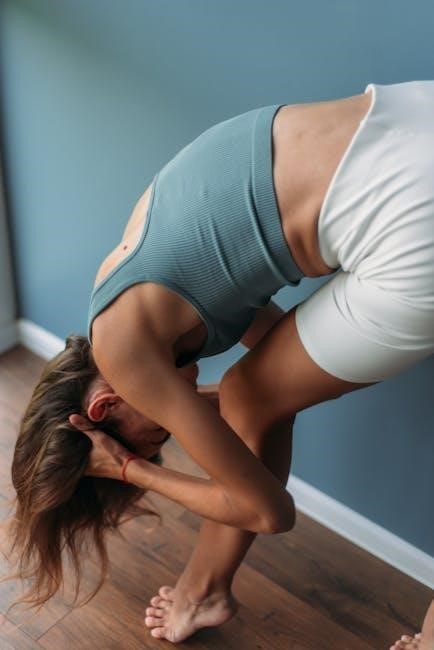
Paid PDFs, typically created by experienced yoga teachers, often offer more comprehensive sequences, detailed pose breakdowns, and modifications for different levels. They may also include thematic focuses, like hip openers or spinal twists.
Consider your experience level and learning style when choosing. Beginners might benefit from a simpler, free sequence, while experienced practitioners may appreciate the nuance of a paid PDF.
Safety Considerations & Modifications
Prioritizing safety is paramount when practicing Yin Yoga, especially when following a printable PDF sequence. Always listen to your body and avoid pushing beyond your comfortable range of motion; Yin targets deep connective tissues, and discomfort differs from pain.
Modifications are crucial for accommodating individual needs and limitations. A good PDF will suggest variations for poses, utilizing props like bolsters, blankets, and blocks to support the body and deepen the stretch safely.
Individuals with pre-existing conditions, such as joint problems or injuries, should consult a healthcare professional before starting Yin Yoga. Pay attention to any sensations and adjust or skip poses as needed, respecting your body’s boundaries.
Listening to Your Body & Avoiding Pain

A core principle of Yin Yoga, and vital when using a printable PDF, is honoring your body’s signals. Yin poses are held for longer durations, targeting deep connective tissues, so sensations evolve over time.
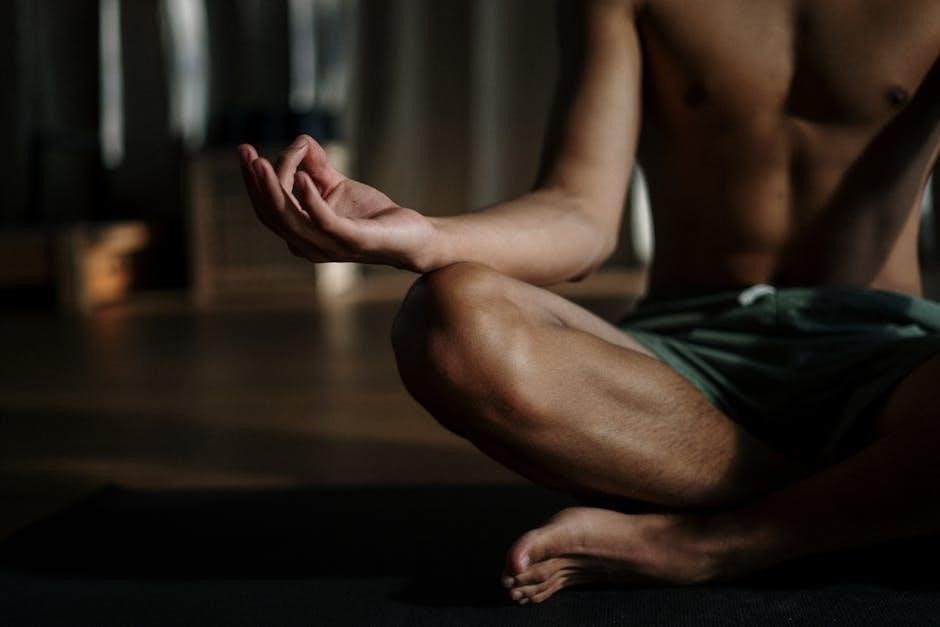
Distinguish between a healthy stretch sensation and pain. A comfortable stretch should feel intense but not sharp, burning, or radiating. If you experience pain, gently ease out of the pose immediately.
Avoid the urge to push yourself into deeper expressions of a pose simply because you see it in the PDF. Modifications are encouraged! Remember, Yin is about surrender and receptivity, not achieving a specific shape.
Regular self-assessment throughout the practice is key to preventing injury and cultivating a mindful connection with your body.
Using Props (Bolsters, Blankets, Blocks)
Printable Yin Yoga PDFs often suggest prop usage to support your practice and deepen the experience safely. Props are not a sign of weakness, but tools for accessibility and comfort.
Bolsters are excellent for supporting the spine in poses like Sphinx or supported Bridge, allowing for gentle opening without strain. Blankets can be rolled or folded to elevate hips in seated poses or provide cushioning under knees.
Yoga blocks offer height and stability, particularly useful in poses like Butterfly or Dragonfly, helping to bring the floor closer to you and reduce overstretching.
Experiment with different prop combinations to find what best suits your body’s needs and the specific pose. A well-chosen prop can transform a challenging pose into a deeply restorative one.
The Yin-Yang Symbol & Its Relevance to Yoga
The Tai Chi symbol, visually representing Yin and Yang, embodies the core philosophy underpinning Yin Yoga practice. It illustrates how seemingly opposite forces are interconnected and interdependent, constantly flowing and transforming into one another.
In Yin Yoga, we cultivate stillness and surrender (Yin), contrasting with the dynamic, active practices of Yang Yoga. The symbol’s swirling design signifies this continuous movement and balance.
A printable Yin Yoga sequence PDF often implicitly reflects this principle, offering poses that target connective tissues (Yin) while acknowledging the body’s inherent energy (Yang).
Understanding this duality enhances your practice, encouraging acceptance of both effort and ease, activity and rest, ultimately fostering harmony within yourself.
The Tai Chi Symbol Explained
The Tai Chi symbol, a circle divided by a curved line into black and white halves, isn’t merely decorative; it’s a profound representation of cosmic balance. The black represents Yin – darkness, passivity, and the feminine – while white embodies Yang – light, activity, and the masculine.
Crucially, each half contains a seed of the opposite, symbolized by a small circle of contrasting color. This illustrates that nothing is purely Yin or Yang; they always contain the potential for transformation.
When selecting a printable Yin Yoga sequence PDF, consider how the poses reflect this interplay. A well-designed sequence will incorporate both Yin and Yang elements, promoting holistic well-being.
The symbol’s continuous flow mirrors the cyclical nature of life, and the importance of embracing both stillness and movement in our practice and beyond.
Yin & Yang in Seasonal Changes & Directions
The principles of Yin and Yang extend beyond abstract philosophy, manifesting in the natural world, particularly in seasonal cycles and directional influences. Winter, with its darkness and inward focus, embodies Yin, while summer, bright and expansive, represents Yang.
When choosing a printable Yin Yoga sequence PDF, consider aligning your practice with the current season. Deeper, longer-held Yin poses might be ideal during the Yin months (autumn/winter), while more dynamic sequences could suit Yang seasons (spring/summer).
Directionally, Yin is associated with north and earth, fostering grounding and introspection. Yang aligns with south and heaven, encouraging outward energy and vitality.
A thoughtfully curated PDF might suggest modifications based on these seasonal and directional energies, enhancing the practice’s resonance with your environment.